Bursa Lip Filler: Application Purposes, Process, and What You Need to Know
Lips play a determining role in facial anatomy from both an aesthetic and functional perspective. With advancing age, a decrease in collagen and elastin fibers in the tissues, structural asymmetries, or loss of volume can lead to changes in the shape of the lip area. Today, medical filler materials are used to address these volume losses and reconstruct the lip contour. Bursa lip filler procedures are among the medical treatments performed by specialist physicians in authorized healthcare institutions. In this article, the medical foundations of lip filler procedures, the characteristics of the materials used, and the pre- and post-procedure processes are addressed with an objective approach.
What Is Lip Filler and What Does It Contain?
Lip filler is the injection of special substances under the skin or into the mucosa to restore tissue loss in the lips, correct asymmetries, and provide a proportion that is harmonious with facial features. The most commonly preferred material in medical procedures is hyaluronic acid (HA)-based fillers.
Hyaluronic acid is a polysaccharide naturally synthesized in the human body in connective tissue, skin, and joint fluids. Its primary function is to retain water and provide moisture to tissues. Medical hyaluronic acid gels obtained in laboratory settings through cross-linking technology show a high degree of biological compatibility with tissue. Over time, this substance is broken down by the body’s own enzymes (hyaluronidase) and naturally eliminated from the system. Its non-permanent nature is an important factor that increases the medical safety of the procedure.
In Which Cases Is Lip Filler Applied?
As a medical procedure, lip filler is applied within certain indications as a result of the physician’s physical examination and anatomical assessment:
Addressing Volume Loss: In cases where thinning of the lip mucosa and loss of volume are observed due to the aging process.
Asymmetry Correction: In balancing congenital or acquired disproportions between the upper and lower lip or between the right and left halves of the lip.
Contour Enhancement: In defining the “vermilion border,” which is referred to as the outer frame of the lip, and the “Cupid’s bow” in the center of the upper lip in accordance with anatomical structure.
Reducing Perioral Lines: In softening the vertical expression lines just above the lip, known as “barcode lines.”
Criteria to Consider Before Getting Lip Filler in Bursa
For individuals planning to undergo lip filler treatment in Bursa, choosing healthcare institutions that act in accordance with medical ethics and legal regulations is critically important for public health. Before the procedure, the following criteria should be taken into consideration:
Competence and Expertise: Filler injections should be performed by Plastic, Reconstructive and Aesthetic Surgery specialists, Dermatology specialists, or physicians with a Ministry of Health-approved Medical Aesthetics certificate who have full command of facial anatomy. Performing such medical injections in unauthorized businesses such as beauty salons or hairdressers is against the law and carries serious health risks.
Clinical Conditions: The environment in which the procedure will be performed must fully comply with sterilization rules.
Material Reliability: The hyaluronic acid filler to be used must be approved by the Ministry of Health and have CE or FDA certification. Patients have the right to request the consent form containing the barcode and lot number of the product applied to them from their physician.
Procedure Process: Step-by-Step Application Stages
The lip filler procedure requires comprehensive preparation and a careful clinical application process. The treatment protocol generally consists of the following stages:
1. Consultation and Anatomical Assessment
The physician reviews the patient’s medical history and records the medications they use, especially blood thinners. Within the framework of golden ratio principles, the structural features of the face, jaw position, and dental alignment are examined. The volume needed for the lips and the injection points are planned at this stage.
2. Anesthesia and Preparation
The lip area is extremely rich in nerve endings and is a sensitive area. To ensure comfort during the procedure, medical creams with local anesthetic effects are applied to the area approximately 20-30 minutes before the procedure. When deemed necessary, regional numbness can be achieved using the nerve block method also used in dentistry.
3. Injection Stage
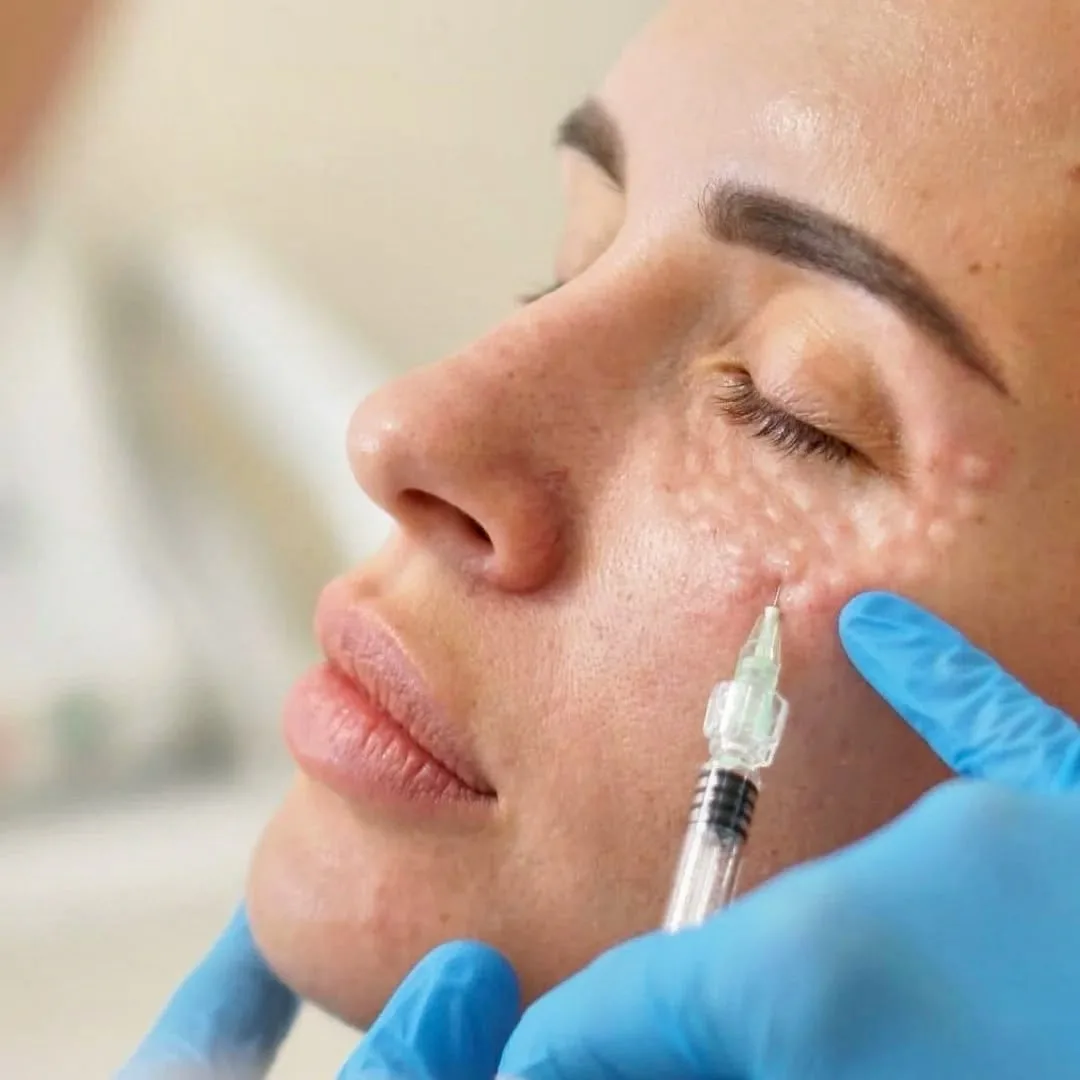
Hyaluronic acid is injected into the planned areas using very fine needles or blunt-tipped cannulas. The physician may apply light massage movements during the procedure to ensure even distribution of the substance within the tissue. The entire clinical process is usually completed within 15 to 30 minutes.
Post-Treatment Recovery Process and Things to Consider
Strictly following the medical advice given by the physician after the procedure is essential to prevent the risk of infection and speed up the recovery process.
For the first 24 hours, the application area should not be touched, and cosmetic products or chemicals such as lipstick should not be used due to the risk of infection.
As a result of the injection, mild edema (swelling) in the tissue and small ecchymoses (bruising) at the needle entry points are expected physiological conditions. These signs usually subside on their own within 3 to 7 days.
For the first 48 hours, hot beverages and high-temperature environments such as Turkish baths and saunas should be avoided.
To prevent the material in the tissue from shifting, exaggerated lip puckering movements (using straws, whistling) and forceful massage of the area should be avoided for the first few days.
Since hyaluronic acid retains water and adds volume, drinking plenty of water in the days after the procedure will support tissue repair.
Who Is Not Suitable for Lip Filler?
According to medical rules, lip filler is contraindicated in certain special situations. The procedure cannot be performed on women during pregnancy and breastfeeding, or on people with an active cold sore (herpes simplex) infection or an open wound in the application area. In addition, individuals with blood clotting disorders, uncontrolled autoimmune diseases, and people with a known hypersensitivity (allergy) to the filler ingredient are not suitable candidates for this treatment.
Frequently Asked Questions
How long does it last? The longevity of hyaluronic acid-based fillers varies on average between 6 and 12 months depending on individual metabolic rate, lip mobility, and the cross-link density of the material used. At the end of the stated period, the substance is eliminated from the body and the lips return to their former form.
Can the procedure be reversed? One of the most important medical advantages of hyaluronic acid fillers is that they can be dissolved if desired. In the event of an unexpected medical reaction, the filler can be dissolved and eliminated within hours thanks to the enzyme called “hyaluronidase” injected by the physician.
Will an artificial appearance occur after lip filler? In injections performed by authorized physicians with adherence to anatomical structure, in appropriate doses and with the correct technique, tissue compatibility is achieved and lip functions are not affected. The use of excessive material that is inconsistent with the structural proportions of the face is not compatible with medical aesthetic principles.
Legal Notice: This article has been prepared solely for public information purposes within the framework of the Regulation on Promotion and Information Activities in Health Services. The information contained in the text cannot replace a physician’s examination, diagnosis, or treatment. For a definitive diagnosis and treatment planning regarding medical procedures, you must consult an authorized healthcare institution and a specialist physician.